
Stepping Into Living History at the LA Arboretum
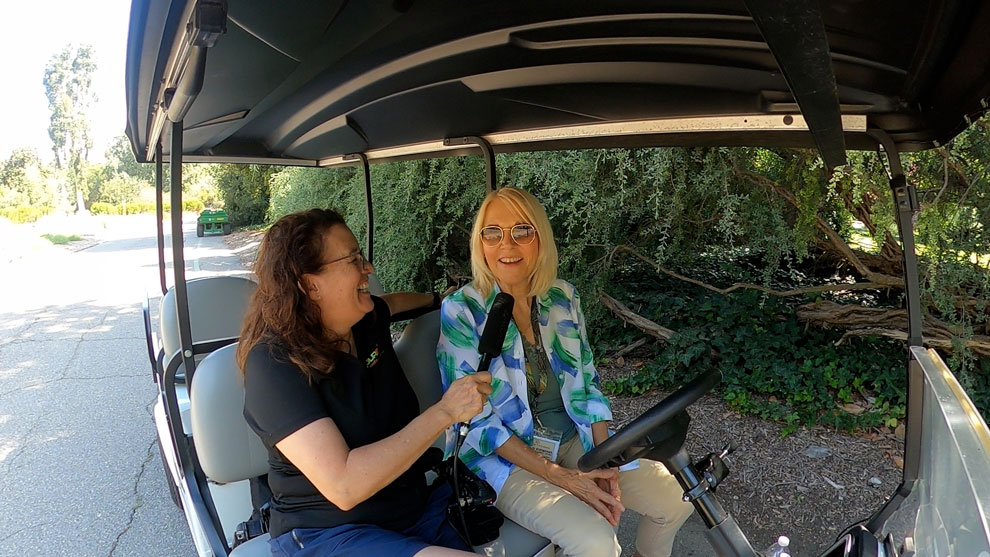
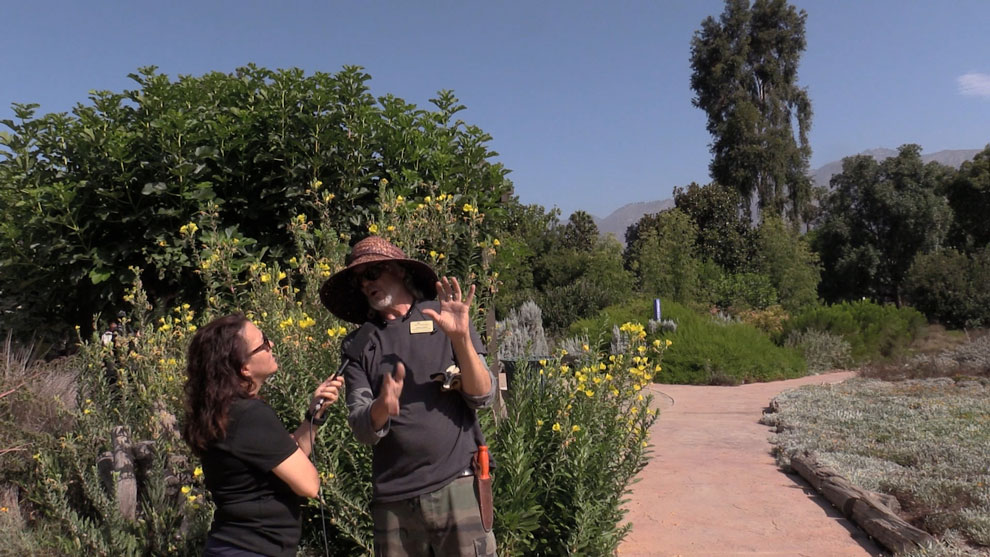
Join me, Christine Zito, as I take a rolling tour through the LA County Arboretum in Arcadia with Sylvia Rosenberger and stop at Crescent Farm with John Latsko to learn why this place is equal parts garden, museum, and wildlife refuge. Along the way, we connect native plants, water-wise gardening, and local history to simple choices listeners can make at home.
- how the Arboretum is funded and why the foundation matters
- what makes the 127-acre site unique in Los Angeles County
- monarch butterfly habitat basics through host and nectar plants
- Engelmann oak conservation and why age diversity matters
- Crescent Farm’s shift from lawn to regenerative, drought-smart landscape
- what “biodiversity” means on one densely planted acre
- native bees vs honey bees and why solitary bees need habitat
- how wood debris supports nesting, birds, reptiles, and spiders
- Baldwin family history and connections to Santa Anita
- standout collections and seasonal highlights plus films shot on site
- membership value, events, and why people return often
- Queen Anne Cottage details and the lake restoration plan
I like to thank our Sponsors:
Longo Toyota located in El Monte. #1 in the World since 1967
You can hear this podcast on these channels below





Transcript
LA County Arboretum and Botanic Garden
Christine Zito
Welcome to Arcadia FYI. I’m Christine Zito, your wonderful host. I am so pleased that you’re here with me today. I have a great show. I’d like to start thanking our sponsors, Longo Toyota in El Monte. Have you been there? Okay, it’s right off the 605 Freeway. And they’re on this huge lot, this huge acres. And they do more than just sell cars. So you have to go by and say hi to Michael, say hi to Brooke. There’ll be both work hiding underneath. She’s downstairs. But Mike’s always upstairs, so you can say hi to him. Star 7 Financial with Francine Chiu. Not only does she help you with your finances, like retirement, she can help you with your children’s education fund. That’s Santa Anita Park, which is just right over there. Okay. They’re doing horse racing right now. And of course, you know, you heard Pete in here. I can’t wait for that. I already bought my tickets. Great. And the Le Méridien Hotel, right here in Arcadia and Pasadena. Arcadia FYI.
On Location At The Arboretum
Christine Zito
It could be 411. But Arcadia FYI is on location. We are at the Arboretum, the LA Arboretum, right here in Arcadia. And this is Sylvia. Hi, Sylvia. Hi. How are you? Good to be with you. This is so much fun. I have not seen the Arboretum the way I have seen it today, and we’re gonna see together the Arboretum. Um, and if you’re listening, we’re gonna explain this and try and vividly put it into your mind of what the arboretum, so you can follow with us. So as we’re going, we’re gonna get to know uh Sylvia here a little bit. So Sylvia, so you’ve been are are you uh were you born here in California? I’m a native. Yes. You’re a native and and uh LA Glendale. I was born in Glendale. Oh, okay. And so married, have kids, grandkids, dogs, pets.
Sylvia Rosenberger
Well, almost all of the above. I’m married, uh celebrating 40 years come Saturday. Congratulations! Thank you, thank you, and I have two grown kids. Our daughter um is Sarah, and she just had our first grandchild, a baby girl, and our son uh is in uh New York. He’s 27 years old in um New York. New York.
Christine Zito
All right, so congratulations on being a grandma. Thank you. So being a grandma, what when she gets a little is it a little girl? A little girl. And when she gets older, what do you want her to call you? Grammy, grandma, I mean, or I want her to figure that out.
Sylvia Rosenberger
You know, sometimes little ones they can’t pronounce things and they come up with quirky nicknames, and I’m just waiting to see what she comes up with. I’ll be delighted, whatever it is.
Christine Zito
I know. Um, if I could say being a great aunt, I don’t have any kids, but you know, I’m a great, I don’t need the title. I know I’m great. But uh my nieces and nephews, they call me Auntie Stina, Auntie Teen, Auntie Titi. And you know what? I don’t care what they call me.
Sylvia Rosenberger
My son-in-law is uh opting for grandma Sill, so we’ll see, maybe.
Christine Zito
Grandma Sill, I like that. I said, all right, all right, take us on the tour,
What The Arboretum Protects And Funds
Christine Zito
Sylvia. All right, share with us what the arboretum is all about.
Sylvia Rosenberger
Well, we’re happy to have you here today. So a little bit about the arboretum and our history and founding. We were established in 1947, and the um foundation, which is the nonprofit partner that co-manages the arboretum with LA County through the Department of Parks and Recreation. The foundation was founded just a year later in 1948. And today the foundation in co-leading the arboretum really is uh on the philanthropic side, we raise money for so many things. The county, a terrific partner, but it takes so much. We are in addition to a garden and museum of living plants, we are a museum of history. And uh, we have our four historic landmark buildings here on the left. Here is our coach barn. On the way down, we’ll take you by the Queen Anne Cottage and our Adobe as well. Um, but it takes a lot, so uh we raise money for uh projects like our new entrance, uh some of our new gardens, all of our education programming, and care of these landmark buildings. This plant here is a rose of Sharon, which is related to the hibiscus, and you can see how beautiful those are. They’re really um looking good this time of year. And on our right is our herb garden. And the herb garden was designed by Edward Huntsman Trout, landscape architect, and he also did
Tallac Knoll And The Saved Land
Sylvia Rosenberger
our rose garden. But we’re gonna head up to the high country on Talloc Knoll. High Country.
Christine Zito
Well, it sounds like really cool.
Sylvia Rosenberger
Yes, um, we have 127 acres, over 10,000 species of plants. Wait a minute. A hundred and what? 127 acres. Of arboretum? Yes, of arboretum. See, I didn’t know that. And um this area where we’re going to, the high country, this was all staked out for housing, and it was really just saved in time. Um the the land was purchased from Harry Chandler. That’s part of our bamboo collection.
Christine Zito
I love that. This has always been my, if I have to say, my favorite part of the arboretum is this the bamboo.
Sylvia Rosenberger
A lot of the kids love it too. It’s a great place to explore.
Christine Zito
Can I confess and say I would go inside there and play inside the bamboo? Yes.
Sylvia Rosenberger
Yes, there’s a lot, the whole arboretum is a playground. It’s a whole place of learning. So um all of this high country here was staked out for housing when it was purchased and saved from Harry Chandler, who was a real estate, prominent real estate developer at the time. And that became today’s arboretum. But if that had not happened under Samuel Ayers, who’s considered one of our founding fathers, um it was um it would all be um housing today. So up on Tallock Knoll, um, you heard about some of our pollinator conservation work with John at Crescent Farm. In addition to bees, though, the Arboretum is a certified monarch waste station, which means that we have all of the host, nectar, and shelter plants that will sustain a monarch through its life cycle. Are you serious? Yes. Yeah, that’s why when you see the arbor, when you walk around the arboretum today, you see a lot of butterflies, and that’s all driven by habitat. Okay, when you say monarch, now you’re not talking about explain the monarch. The monarch butterfly, which is the orange with the black dots. It’s a type of butterfly. Okay. I’m thinking of like government. I’m gonna no monarchies here. So but on the right here, um now we’re talking a little bit about our plant conservation programs. This is an example of an English oak. This was a tree native to Southern California and Baja,
Monarch Habitat And Engelmann Oak Rescue
Sylvia Rosenberger
but it is now endangered. So back in the World War II housing boom, there were groves of Englems that were just clear-cut. And so today the arboretum has the largest living stand of Engelman oaks in LA County. And so, as part of our conservation work, our curator of Living Collections has been propagating the next generation of Englems in this grove. Because in order to have a sustainable population, you need to have age diversity. So he’s been experimenting with some native grasses also to create an understory in these sunny spots. But uh, some of these Engelmans, this started a number of years ago, have now gotten their first pruning, so they’re finally getting big enough. But every year we lose some Englemans, so it’s good to keep that population going. These trees are known for their very twisty branch architecture, which when you look at the trees, you can see that. Right in front of us is Crescent Farm. And it’s called Crescent Farm because if you looked at it from up above, it’s crescent shape because it’s about harvesting water. And this garden was founded in 2014 at the height of the drought when people were pulling out grass and putting in rocks and cacti, and our horticulture team was saying, you know, you can have a beautiful garden, even a food-producing garden, and conserve water if you use regenerative gardening techniques, which is what we teach here at Crescent Farm. And all of those workshops are free of charge to the public, and we encourage people to learn. They even have some online classes so people who are farther away can participate.
Christine Zito
So
Crescent Farm And Regenerative Gardening
Christine Zito
let’s pull over and go find John. Okay, we’re here at the Crescent Gardens. Is that right?
John Latsko
Crescent Farm officially is the is the actual branding name, Crescent Farm. A lot of people just call it the Crescent. You’ll hear the cards. Okay.
Christine Zito
This is beautiful, and you’re probably wondering who I’m talking to this most handsome man right here. I mean, I love the hat. I love the I mean he does he does look like a farmer.
John Latsko
Right? Yeah, that’s a look.
Christine Zito
Yeah. John, okay. Now your name is John. Okay, you have to say your last name.
John Latsko
Sure. Let’s go. John Latsco. Let’s go.
Christine Zito
Okay, okay. So Sylvia’s talked highly of you. Okay, is it all true?
John Latsko
Is it all true? Thank you. I told you you’ll learn more later. There is it’s that and more.
Christine Zito
Uh-oh, okay. So now she was trying to educate me on everything that this crescent, the crescent, does. So now, in your words and in what you do, explain to us what this what crescent is all about.
John Latsko
For sure. So the project was actually imagined in around 2013, and it began as a change up to a flat lawn that was this acre was an entirely flat lawn. The soil was poor, it was a mix actually of weeds and a lot of other like no-nos that we know better now. So, in this incredibly inspired vision, this acre was transformed primarily and initially to show the the visitors and the members what they can do to save resources. Namely, first and foremost, water. So that was the game plan initially up front, and I can talk about what that looked like and the remnants of that first vision. But since there, in the 11 and a half years that I’ve been attached to this project, we’ve made it become so much more. And it’s now the most biodiverse acre in the 127 years of the world.
Christine Zito
Well, what do you mean by biodiversity?
John Latsko
Right, because we have the most variety densely planted in this acre of any other similar acre in the arboretum. And we’ve done that on purpose as we’ve learned the benefits of bringing a wide variety of native plants to our landscape. They do two things. The native plants require less resources because they’re adapted to being in these arid circumstances. So that’s a plus for any native garden. The second thing is you’re attracting all of the pollinators, all the associated critters that are brought in specifically because they have very symbiotic, specific relationships with our native plants. So we have go ahead. Oh, we have lots. We have about five different sages, so those are salvia, and then there’s different species. Uh-huh. We have Arctostaphalis, we have Frangula, coffeeberry, the manzanita, we have many different kinds of cyanothis. We have ground cover shrubs like the buckwheats that we have. We have four different kinds of buckwheats, that’s areogonum, including the Channel Island, Channel Island variety there that looks like uh baby’s breath, and it’s just adorned with all the flowers. So there are wildflowers in the wildflower season. Behind us, there’s even still some remnant poppies blooming. So we have wildflower array, shrubs, sub shrubs, small trees, and large trees.
Christine Zito
Am I allowed to pick the flower?
John Latsko
Sure, you can well, only with my permission. You didn’t hear that. So, yeah, we have two desert willows that are a native tree, also, and I can extol on the virtues of planting a native tree because it’s an instant available volume of food resources for all the pollinators and the native critters.
Native Bees And Unexpected Predators
Christine Zito
Who are the pollinators?
John Latsko
Great question. So when we say bees, normally people think of maybe a bumblebee, but they’re they’re usually in their mind’s eye they’re seeing a honey bee. The honeybees are actually an invasive species that were brought over as an agricultural product with Europeans that ended up by inhabiting North America. So they brought the honey bee. Since then, the honey bee is naturalized, and in a lot of parts of planet Earth they have as well. However, that native that bee is actually native to its circumstances in Europe. So when we understand that, we understand that if we look down, dig down, you see it’s kind of going to be. Yeah, but look at that. He’s gonna go, oh, he just ate the we just saw a lizard eat a bee. It was a fence lizard. So that said, on the on the bee note, which reptiles love to eat bees, we have in California, we have hundreds and hundreds of varieties of native bees. So once you start understanding that, it’s a rabbit hole to go deep into, and it’s just fascinating. So all shapes and sizes, different colors, and like 95% of those species of native bees are solitary, they require no hive, and they don’t live in a group. They live solitarily, usually in in the ground, or in cavities preformed sometimes inside of tree remnants.
Christine Zito
Yeah, well, we just saw a lizard eat alone, little bee.
John Latsko
Right. And you can see that um a lot of our landscape inside of the crescent, this acre is lined with all of this wood debris. Essentially, up front, we used it as a soft barrier to keep people out of our juvenile plantings at the time. But then over time, and that’s really the richness of this experience, we’ve learned so much just being observationally attached to this acre. We learned that the busyness of wildlife activity happening in these wooden edges, and we learned about the native bees that are probably nesting, have nurseries in those in that wood. You just saw the reptiles pop out there. There’s an array of arachnids and the spiders. I’ve seen a wren actually dance in and out of the spaces. What’s a wren? A wren is a very small bird, and they’re insectivores, so it was hunting for spiders to nab, and it was busy and healthy and happy because we had all this debris available for its experience. Native bees, if once you establish the right plants and you see native bees come to those plants because they have symbiotic relationship with the flowers, they usually set up shop, nursery, family in the vicinity. So once you’ve created a native garden and see a variety of pollinators start to come into your garden, you’ve established a healthy resource for that.
Christine Zito
And what does that do for the environment, for the cultural environment?
John Latsko
That’s a great question. First of all, potentially in a big, big, big broad way, we could be saving pollinator species. Just because we’re losing native bee species are disappearing before we have a chance to catch up and document where they are, what they need, right, and which territory. So people are scrambling to accumulate as much research on that as possible, right? Ahead of projects that would demolish their their resources and their their home sites. So each person, and this is something the takeaway is each person can put their tiny investment, like a native plant garden, to establish as much as much of a chain of resources available to those native bee species. If enough of us devote at least a portion of our landscape that we are in charge of, that we steward at home in our gardens and our yards, if we put in at least a patch of that, we will be helping survive species of pollinators. Sometimes before we even know that they’re on their way out.
Christine Zito
This is fascinating. Absolutely.
John Latsko
Yeah. Absolutely.
Sylvia Rosenberger
There’s a cute little visitor. One thing special about the arboretum though is every time you come, there is something different to see. So we have trees that are summer blooming, fall blooming. Um winter, we’re known for our aloe trail that peaks from January to March. Our fall color is now incredible here. They say we don’t have fall color in California. We have fall color.
Christine Zito
This is beautiful. This is more like being in fall every season of the year.
Sylvia Rosenberger
Yeah, and that’s one of the nice things like for our members. Um and it’s a different experience every time you come, which really makes it special.
Baldwin History And Santa Anita Roots
Christine Zito
Okay, so talk about the history. Um, I know the the Baldwins come into this history a little bit, so talk a little bit about that.
Sylvia Rosenberger
Sure. Well, um Baldwin um purchased the 8,000 acres Santa Anita Rancho in uh 1870, and it was 8,000 acres. And at the time it was the princely sum of $200,000. But imagine owning all of Arcadia, Sierra Madre, and Monrovia for $200,000.
Christine Zito
Yeah, uh yeah, I can’t imagine it. Yeah.
Sylvia Rosenberger
He ultimately amassed 40,000 contiguous acres though, and was uh really a wealthy landowner. He was Arcadia’s first mayor. He is considered by many the ther the father of thoroughbred racing in Southern California. So not only did he grow prize-winning wines and ports and citrus groves here at the rancho, he also had uh training tracks and bred thoroughbreds. Had five American Derby winners.
Christine Zito
You know, I know I know you’re not the Santa Anita Park, but didn’t he buy the Santa Anita Park? Isn’t he like the founder of the Santa Anita Park?
Sylvia Rosenberger
Well, um Baldwin died actually in Oredobe in 1909, and his daughter Anita inherited the property, and she was the one who sold the land that became Santa Anita today. And if you’re a racing fan, you know there is still a Baldwin Stakes, and that’s in honor of Baldwin and Baldwin Avenue, Baldwin Park. Uh there’s a lot of references to Baldwin today.
Christine Zito
Yeah, and you know what? If you ever do the 5K run with the Santa Anita Park, one of the great things is that the 5K rung, it it does a mile like a mile and a half in the arboretum. It’s beautiful. It’s a great way to see it. Oh, it’s yeah, I can see the falls and everything.
Sylvia Rosenberger
Now, this plant here is called a bird of paradise
Tropical Collections And Famous Film Locations
Sylvia Rosenberger
shrub, this bright orange uh or bright yellow with the orange uh ornamentals. It’s really lovely this time of year. Everything’s lovely. This is the high point at the arboretum. We’re about 600 feet above the base of our waterfall, so this is where we grow our tropical plants. And you know how warm air rises and cool air descends. So the tropical plants love that. But the other reason this makes it ideal is we have a very mature tree canopy up here and that acts to insulate. And so our plumeria grove is up here. This grove, which we’ll drive through, this grove is actually the largest collection of plumeria in a public garden in the western United States. So it really is one of our uh signature collections. We also have up here some hibiscus, there’s some beautiful varieties with different petal formation and colors. And some of these trees here are where we see many of our uh big birds nesting, our raptors in the springtime.
Christine Zito
Ooh, raptors! Yep. Okay, wait a minute. Is there gonna be a dinosaur coming out here soon?
Sylvia Rosenberger
No. But Jurassic World was filmed here. Oh, yeah, that’s right. Talk about some of the famous movies that were filmed here soon. Yeah, well, way back, um, even um the Tarzan franchise, 12 different Tarzan films were filmed here at the Arboretum. I think I hear them. Yeah? You can hear birds? I can hear Tarzan. Oh good. And uh the uh as far as 1937, as far back uh before it was the Arboretum, it was just open space, but uh Johnny Weissmuller actually shot here, he was the first Tarzan. This beautiful tree in front of us, this giant tree, is called a uh sycamore fig. That tree was planted from a five-gallon container when the arboretum was opened, and look at it today.
Christine Zito
A five-gallon container, like I can put in my house?
Sylvia Rosenberger
Yes, like you could pick up yourself at the nursery. Look at it now.
Christine Zito
That’s a huge tree. It is. Look at this, how look at it. We’re we’re if you’re watching on YouTube, you could see that we are just traveling the arboretum. It is a huge campus. I just did not know.
Sylvia Rosenberger
We have up up here some beautiful aquatic pools that uh give the illusion of the source of water for our waterfall. And the tree on the right here is called an African uh tulip tree, and you can see the flowers have like a crepe paper texture. We’re looking at the really pretty yellow one, but beyond that you can see the bright fiery orange.
Christine Zito
You know what, Sophia, how often do you walk and get to enjoy the operating?
Sylvia Rosenberger
I try to walk almost every day if I can. It really, because it’s constantly changing and it’s a dynamic garden, it’s always great to see what’s new in the garden. And that’s why so many of our members choose to come. And members, of course, get early access. They’re in at 7 30 in the morning, which is nice on a summer day. We open to the public at nine. So that’s one of the many member benefits. Um but what uh strikes me about this vista is when you look out toward the mountains, you’re looking across Arcadia into Sierra Madre, and for the most part, all you see are treetops, and that just speaks to you know our region and how we value trees and and uh how they contribute to people’s lives.
Christine Zito
But how many people visit the park a a day that you know?
Sylvia Rosenberger
I know it’s summer right now, but well it’s uh it’s about five hundred and forty seven thousand a year, so divide that and you can figure out the math. We’re obviously heavier on the weekends, and um some of our event days are quite large. We expect six thousand over our two day plumeria festival as an example. Six thousand? How do you fit that many? Well, wait a minute, you have 127 acres. And we’re open till seven o’clock, so we have that’s across the whole day. There are a couple of New African uh tulip trees that just went in this year. We’re gonna go off-road a little bit now.
Membership Perks And The Rose Garden
Christine Zito
Okay, all right. Talk a little bit as we go off uh road, talk a little bit about the membership.
Sylvia Rosenberger
Um, family membership is the most popular um level, and it’s $99 a year, and that’s for two adults and children under 18. But the great thing for that, you get to come all year as much as you want, and there’s so many free programs for our members that are free with admission. So as a member, you don’t pay admission. So our Arboretum Summer Nights picnic concerts, all free, our Twilight on the Terrace events, which are music, all free. And then you get discounts on so many programs and classes. And so if you come just a couple of times a year, you’ve really paid for it. And it’s just a you’re A supporting the mission and our collections, which we greatly appreciate, but it’s also a great value for families. Talking about photo shoots, you would be amazed how many quincine era photo shoots. You see princesses every day here at the Arboretum, especially in the springtime, doing their quincinera photos. Uh, but our rose garden here is really stunning and is uh is often a great location for weddings. You’ll see the bearded irises, the lavender, the white ones intermixed with our roses. Now, this is Victorian in design, and Victorian design is all about symmetry. So when you look at the arbors, you’ll note that both end arbors mirror each other, and the arbors across mirror each other as well. And of course, they chose a Victorian design to complement the Coach Barn and the Queen Anne Cottage, which are very close by. Alright, now we’re gonna go into the area that’s called the Historic Core of the Arboretum.
Queen Anne Cottage Stories And Restoration
Sylvia Rosenberger
So this was really the heart, the heart of the Arboretum. We have the four historic buildings. Uh the Coach Barn was built in 1879, and it was designed to be the um where the carriages and horses for Baldwin’s guests would stay. This was built during Baldwin’s time on the rancho, and it is a stick-style architecture and complements the Queen Anne Cottage, which was built in 1885 and 1886. So here you see the cottage, and you’ll get a good peek at our lake pre-restoration if you look to your right, and you can see why we are so excited to have this lake restored. And our wildlife will be grateful too, and as will all of our visitors. So that is starting the construction load-in this month. So the Queen Anne Cottage was designed to be Baldwin’s kind of guest house and party house, and uh, we’ve recently done well north of a million dollars of restoration work there. All of the stained glass now has a new protective Lexan, which is a polycarbonate product, but it allows guests to really see the artistry behind the stained glass windows. At one point, they called the cottage the casino. You’re uh looking at the marble tiles. And uh this area here was designed to be an outdoor dance floor, and where you see the veranda bump out, that’s where the quartet would be. And they built in a uh mirror here so that when the ladies twirled they could uh see themselves. And here you can see uh when Baldwin built this, um this portrait is of Jenny Dexter, who was Baldwin’s third wife and the mother of Anita Baldwin. And Jenny passed away of tuberculosis at age 28. And then after that, Baldwin married one more time. His fourth wife uh was Lily Bennett, the daughter of architect Albert Austin Bennett, who designed both the Coach Barn and the Queen Anne Cottage. That marriage didn’t last, and she moved back to San Francisco, and that’s when Baldwin turned the cottage into really an homage to Jenny, who everyone says was the real love of his life. Okay, right across from the Queen Anne Cottage, as part of the lake restoration, we’re gonna have a viewing deck with benches that will
Lake Restoration Plans And Duckweed
Sylvia Rosenberger
look right out onto the lake with the Queen Anne Cottage as a backdrop, and it’s gonna be great for wildlife viewing. And then where you see these upright boulders here at the shoreline, those were uh that’s a historic feature that Baldwin put in, and uh much of the lake perimeter will have that feature restored, and uh we um will be removing about a hundred trees, the ones that you see that have compromised the shoreline, they’ve come up from seed, and they’re they’re what you call volunteer trees, and so they will have to be removed. But as part of our post-construction landscaping, there’ll be 300 new trees added in the proper location. The ducks are still in it. So, this is most people say, is that algae? No, it’s not algae, it’s an aquatic plant called duckweed, and the ducks do eat it. You just either have too much duckweed or not enough ducks.
Thanks And Closing Message
Christine Zito
Thank you so much for being so generous and showing us you know the the arboretum and and again the education and the new construction of that beautiful duckweed little place. I like that, yes. Sylvia, once again, thank you so much for this tour, and this is going to be probably just part one because we did a lot more touring of the Arboretum. I would like to thank our sponsors for making this all happen for me. Longo Toyota, you can go there right off the 605 freeway. They do more than just sell cars. Star 7 Financial with Francine Chiu helping you with your finances. Not only can she help you with your retirement, she can help you with your kids’ education. The San Anita Park, the races are going on right now. Uh, Pete will be back on to talk more about the LA Olympics in 2028 and the Le Méridien Hotel right here in Arcadia and Pasadena. Alright, until next time on Arcadia FYI. Be blessed and make it a great day.